


The Artificial Intelligence Frontier
Harnessing Artificial Intelligence for Intelligence Augmentation >>>
Building on expertise in artificial intelligence, data science, systems engineering, neuroscience, human factors, robotics, immersive visualization, and education, among others, to accelerate human-technology partnerships toward seamless augmentation, ethically and sustainably.



Artificial Intelligence Research Areas
- 56 / 6G / Next G Communications
- Autonomous Systems
- Advance Driver Assistance Systems
- Automated Driving Systems
- Computer Vision
- Crowdsourcing
- Deep Learning
- Expert Systems
- Evolutionary Computation
- Forecasting
- Future of Work
- Human Computation
- Internet of Things
- Machine Learning
- Natural Language Processing
- Neuromorphic Computing
- Neural Networks
- Smart Manufacturing
- Smart Cities
- Robotics
Artificial Intelligence Research Experts
From robotics to deep learning to computer vision, Virginia Tech researchers are making advances and shaping the future of artificial intelligence.
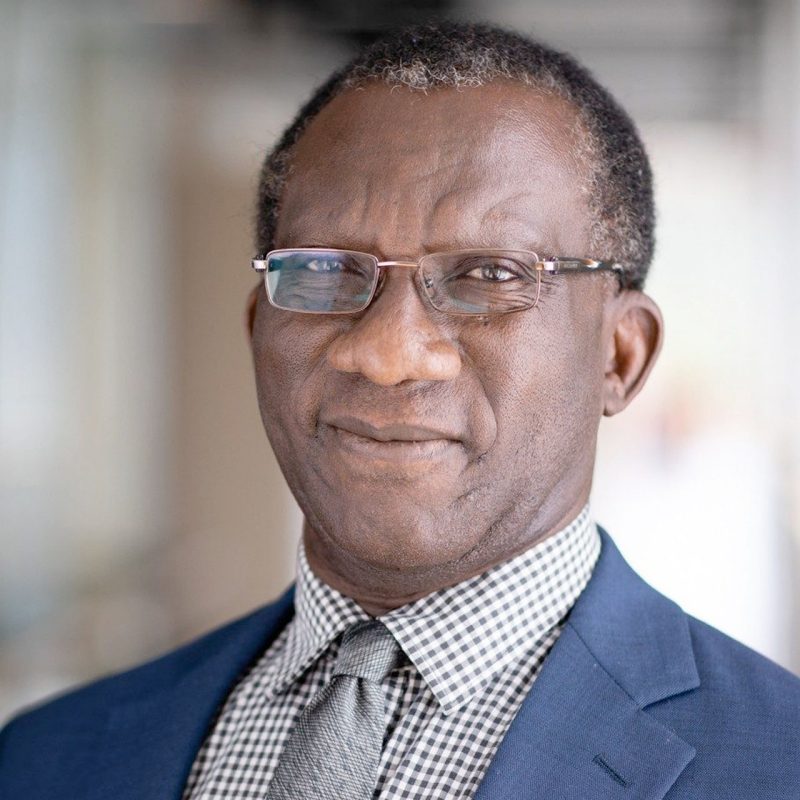
Luke Achenie

Laura Freeman

Naren Ramakrishnan

Daphne Yao
Virginia Tech Artificial Intelligence Research Sponsors



Artificial Intelligence Research Teams
Talented faculty and students are developing cutting edge research that is leading to Virginia Tech’s rise as a global destination for artificial intelligence knowledge and discovery. Virginia Tech’s artificial intelligence footprint is growing — first with the Blacksburg campus’ capabilities with emerging Washington D.C. metro area strengths.
Artificial Intelligence News
-
Article Item
.jpg.transform/s-medium/image.jpg) AI models lean on autism stereotypes when giving social advice, new study finds , article
AI models lean on autism stereotypes when giving social advice, new study finds , articleResearchers tested six major large language models, including GPT-4, Claude, Llama, Gemini, and DeepSeek, using thousands of social advice scenarios. They found that disclosing autism often shifted the models’ recommendations toward stereotypical assumptions about autistic people being introverted, obsessive, socially awkward, or uninterested in romance.
Date: Apr 16, 2026 - -
Article Item
.jpg.transform/s-medium/image.jpg) Award to help researchers catalyze AI-driven discovery for public good , article
Award to help researchers catalyze AI-driven discovery for public good , articleDebswapna Bhattacharya, associate professor of computer science, has received a five-year, $2.1 million National Institutes of Health Outstanding Investigator Award to build on groundbreaking work to develop innovative AI approaches to decode disease and find treatments.
Date: Apr 07, 2026 - -
Article Item
 Faculty members' AI expertise accelerates U.S. Navy preparedness , article
Faculty members at the Virginia Tech National Security Institute are leveraging their knowledge in artificial intelligence to help civilian researchers and engineers for the U.S Navy keep pace with emerging technologies and threats.
Date: Mar 31, 2026 - -
Article Item
 Turning emotion into architecture , article
An interactive installation co-designed by Assistant Professor of Architecture Ramtin Haghnazar uses artificial intelligence to translate visitors’ emotions into responsive light and sound.
Date: Mar 30, 2026 -
Page 1 of 25 | 99 Results