


Research that Matters
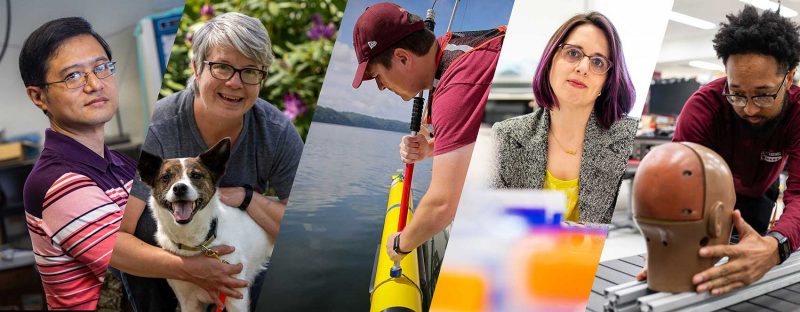
Research that matters.
From the medicine we take and the food we eat to the roads we travel, the phones in our pockets, lifesaving treatments for our pets, and the security of our nation, research touches nearly every aspect of our lives. At Virginia Tech, every experiment, analysis, and breakthrough helps make our world healthier, safer, and stronger.
The impact is measurable in communities across Virginia and around the world. Virginia Tech research strengthens the economy, improves the workforce, and enhances everyday life. Funding this work is essential to advancing health, technology, security, and other innovations that benefit our communities, the Commonwealth of Virginia, and the nation.
Learn how an investment in Virginia Tech research is an investment in making life better.
Virginia Tech's research is possible because of its world class faculty, organizations and expertise. The data speaks for itself.

Research for a Better Future
01:11
Health: Revolutionizing Prevention, Treatment, and Care
-
Article Item
 A better way to build a home? Start in the bathroom , article
Virginia Tech’s FutureHAUS project isn't just a student-faculty academic exercise; it is a direct shot across the bow for the traditional construction industry. While the world has automated the production of everything from smartphones to sedans, residential housing is still largely built stick-by-stick, outside, subject to weather delays, labor shortages, and rising material costs. What if more of the work could happen in a factory instead, with precision-engineered components assembled on-site in a fraction of the time? That’s the idea behind FutureHAUS, Virginia Tech’s research initiative exploring how homes can be designed, manufactured, and assembled differently. Earlier FutureHAUS work, including the team’s project in Dubai, demonstrated the potential of modular construction, with a prototype assembled on-site in just two days. Now, Virginia Tech is taking the next step with FutureHAUS Charlotte, its entry in the inaugural Housing Innovation Challenge. We sat down with co-director Bobby Vance for this Q&A.
-
Article Item
 Scientist rethinks how new medicines are developed , article
Stanford cardiologist Joseph Wu, a member of the National Academy of Medicine, will explore how human cells will transform drug development during the Nov. 5 Maury Strauss Distinguished Public Lecture in Roanoke.
-
Article Item
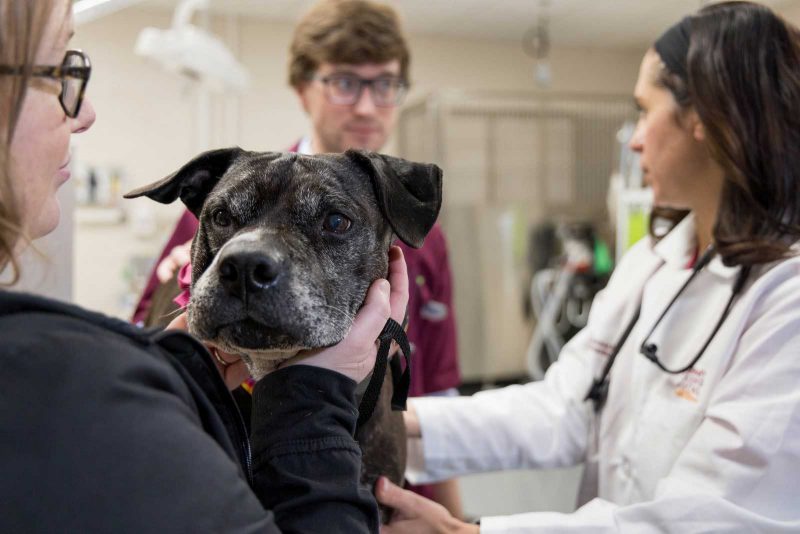
 Q&A: Using sound to fight cancer in dogs and people , article
Joanne Tuohy leads studies of histotripsy, a noninvasive treatment that uses focused ultrasound to destroy tumors.
-
Article Item
 Iron deficiency may explain psychiatric outcomes of a rare genetic condition , article
A rare gene deletion can lead to schizophrenia, autism, or mild developmental delays. Ryan Purcell of the Fralin Biomedical Research Institute will use a new grant from the National Institutes of Health to explore whether iron deficiency might be making the difference.
-
Article Item
 A new approach to kidney matching could save lives , article
According to Virginia Tech-led research using machine learning and sophisticated computer simulations, a redesign of the U.S. transplant system could lead to 900 more kidney transplants each year.
-
Article Item
 Building a more precise approach to psychiatric treatment , article
More than 100 scientists, clinicians, and other participants, including 17 industry representatives, explored how new treatments may give people with schizophrenia more effective care.
Technology: Advancements for Improved Livelihoods

-
Article Item
 Peraton Labs graduate fellows pursue Ph.D.s with a mission , article
Virginia Tech’s Peraton Labs Graduate Fellowship connects computer science research with national security challenges, financial support, and summer internships.
-
Article Item
 Geopolitical upheaval brought water cybersecurity into focus during Fulbright , article
Feras Batarseh returned this summer from his year-long Fulbright scholarship in Qatar, where his proposed project of trying to prepare water systems for cyberattacks very quickly turned into front-line response and resiliency work in the wake of a regional war.
-
Article Item
 ‘Curious Conversations’ podcast: Matthew Vollmer talks about AI and writing , article
Matthew Vollmer joined Virginia Tech’s “Curious Conversations” to explore the impact of artificial intelligence (AI) on writing, creativity, and what it means to be human. He shared insights about AI's capabilities and limitations related to writing, as well as his thoughts on the future of human-AI collaboration in creative fields.
-
Article Item
 Amazon-Virginia Tech initiative names Amazon Fellow and commits support to five faculty-led projects , article
Entering its fifth year, the initiative is funding research focused on efficiency, security, and trustworthiness of agentic workflows.
-
Article Item
 Amazon partnership advances AI and cybersecurity education at the Cyber Range , article
With support from Amazon Web Services (AWS) and the Commonwealth Cyber Initiative, the Virginia Cyber Range and U.S. Cyber Range of Virginia Tech are offering CyberSafe AI, an educational initiative that combines AI literacy with hands-on cybersecurity skills.
-
Article Item
Q&A: Using sound to fight cancer in dogs and people , article
Joanne Tuohy leads studies of histotripsy, a noninvasive treatment that uses focused ultrasound to destroy tumors.
Security: Safeguarding the Homefront

-
Article Item
Peraton Labs graduate fellows pursue Ph.D.s with a mission , article
Virginia Tech’s Peraton Labs Graduate Fellowship connects computer science research with national security challenges, financial support, and summer internships.
-
Article Item
 Board of Visitors approves projects as part of multiyear residential investment strategy , article
The Virginia Tech Board of Visitors reaffirmed its support for the long-term sustainability of the university’s residential inventory, approving two projects during its Nov. 9-10 quarterly meeting.
-
Article Item
Geopolitical upheaval brought water cybersecurity into focus during Fulbright , article
Feras Batarseh returned this summer from his year-long Fulbright scholarship in Qatar, where his proposed project of trying to prepare water systems for cyberattacks very quickly turned into front-line response and resiliency work in the wake of a regional war.
-
Article Item
 Senior Service College Fellowship program offers new mission for Virginia Tech , article
Lt. Col. Glenn Baker became the first senior military officer to attend Virginia Tech since the university became a participant in the Senior Service College Fellowship program.
-
Article Item
 IT teams build a shared approach to computer security , article
Scott Farmer is leading a collaboration among Virginia Tech IT teams to strengthen computer security and reduce duplicated work by developing shared security settings that units across the university can adopt.
-
Article Item
Amazon-Virginia Tech initiative names Amazon Fellow and commits support to five faculty-led projects , article
Entering its fifth year, the initiative is funding research focused on efficiency, security, and trustworthiness of agentic workflows.